Long Phung Nutrition Info
The honest answer on long phung nutrition info: the restaurant publishes no official nutrition figures at all. No calorie counts on the menu board, no allergen chart on the wall. What this page does instead is break down what is actually in the food, typical calorie ranges for each dish category from public nutrition databases, and the allergen and diet notes that matter. For the restaurant’s full lineup, see the Long Phung menu hub.
Where can you find Long Phung nutrition info?
No. Long Phung is a family-run shophouse restaurant on Joo Chiat Road, not a chain with a nutrition lab, and it publishes no calorie counts, no macros, and no allergen matrix. The menu board shows Vietnamese and English dish names with photos. That is it.
So where do the numbers on this page come from? They are typical values for these dish categories from public nutrition databases, and they are flagged as estimates throughout. A bowl of pho is a bowl of pho in rough nutritional terms wherever it is made: broth, rice noodles, protein, herbs. The ranges below reflect that, and they assume a standard restaurant portion. Your actual bowl at Long Phung will differ a little, especially on oil and sugar, since the kitchen seasons by hand.
If you need exact figures for medical reasons, the honest move is to ask the staff about ingredients in your specific dish. The waitresses speak Mandarin and the menu has pictures, so pointing and asking works fine.
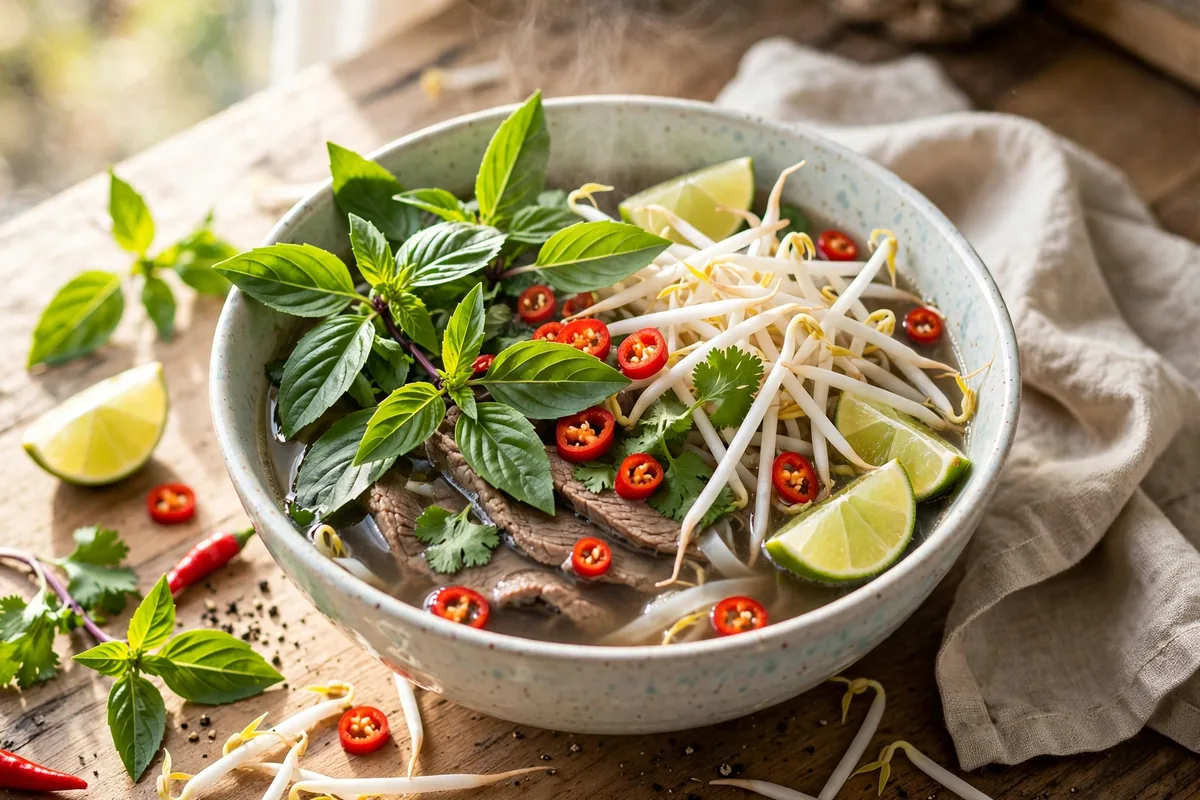
What is actually in a bowl of Long Phung pho?
A bowl of pho breaks down into four parts, and each one pulls the nutrition in a different direction. The broth is the base: a long-simmered beef or chicken stock with charred onion, ginger, star anise and other spices. Diners consistently describe Long Phung’s broth as clear and not oily, which matters, because a greasy broth can add a couple of hundred calories of pure fat.
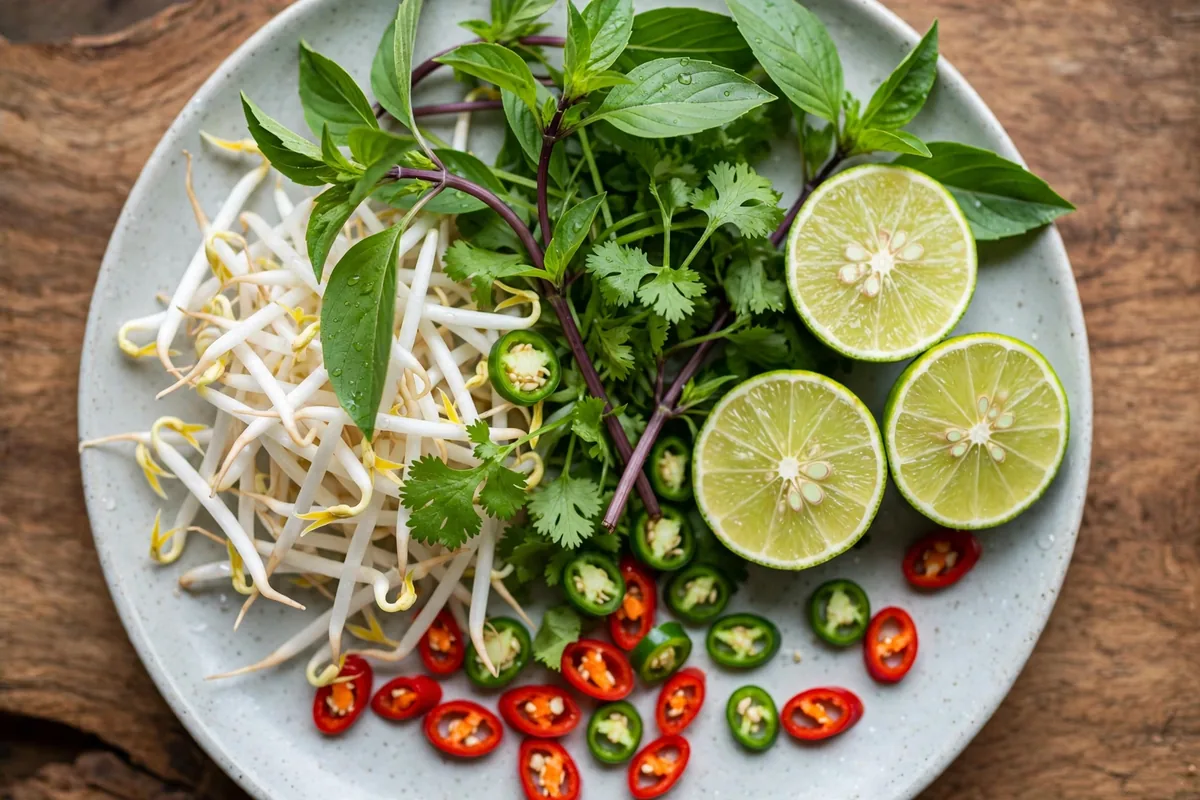
The noodles are flat rice noodles, which means they are naturally gluten free and roughly 200 kcal per cooked cup. The protein varies: sliced rare beef, well-done brisket, chicken, or the combo with an egg in the pho dac biet. Then comes the herb plate, and this is where pho quietly becomes a genuinely nutritious meal: bean sprouts, Thai basil, lime, sliced chilli, sometimes culantro. Fresh, raw, basically zero calories, and a real source of vitamin C and antioxidants.
The watch-outs are the additions, not the base. Hoisin sauce and sriracha add sugar and sodium fast. The fried shallots and the crispy spring roll that comes with the vermicelli dishes add oil. And the broth, while clear, is still a salted stock, so sodium is the one number that runs high across the whole menu.
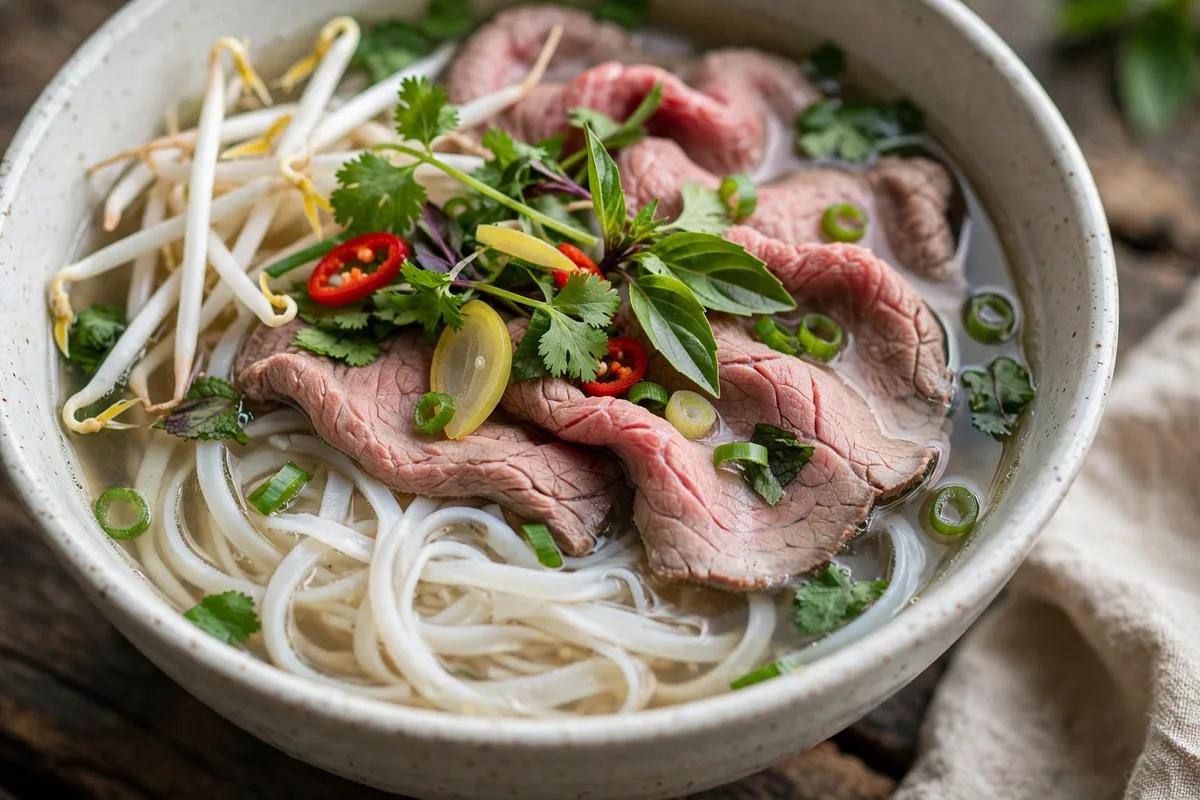
Lighter picks vs heavier picks at Long Phung
Here is the menu ranked by typical calorie load, using dish-category estimates. Treat every number as approximate, from public nutrition databases, not Long Phung’s kitchen:
| Dish | Why It Sits Here | Typical kcal* |
|---|---|---|
| Chicken noodle soup | Clear broth, lean chicken, no fried elements | 450 – 550 |
| Pho Nam (brisket) | Beef broth, well-done brisket, a little fattier | 500 – 600 |
| Pho Dac Biet | Combo beef plus a raw egg whisked in | 550 – 650 |
| Goi Cuon (4 rolls) | Fresh rolls, no frying; sauce adds sugar | 300 – 400 |
| Bun Thit Nuong Cha Gio | Grilled pork plus a fried spring roll and peanuts | 600 – 700 |
| Hu Tieu Bo Kho | Rich spiced beef stew, the heaviest broth | 650 – 750 |
| Com Suon with Op La | Rice, pork chop, fried egg, the full plate | 700 – 800 |
| Ca phe sua da | Iced coffee with condensed milk, mostly sugar | 150 – 200 |
*Typical dish-category estimates from public nutrition databases. Long Phung publishes no official figures.
The pattern is simple: clear soups are the lightest mains, anything with a fried element or a fried egg climbs, and the condensed-milk coffee is a dessert wearing a drink’s clothes. Sodium runs high everywhere because of fish sauce and salted broth, which is normal for the cuisine, not a Long Phung problem.
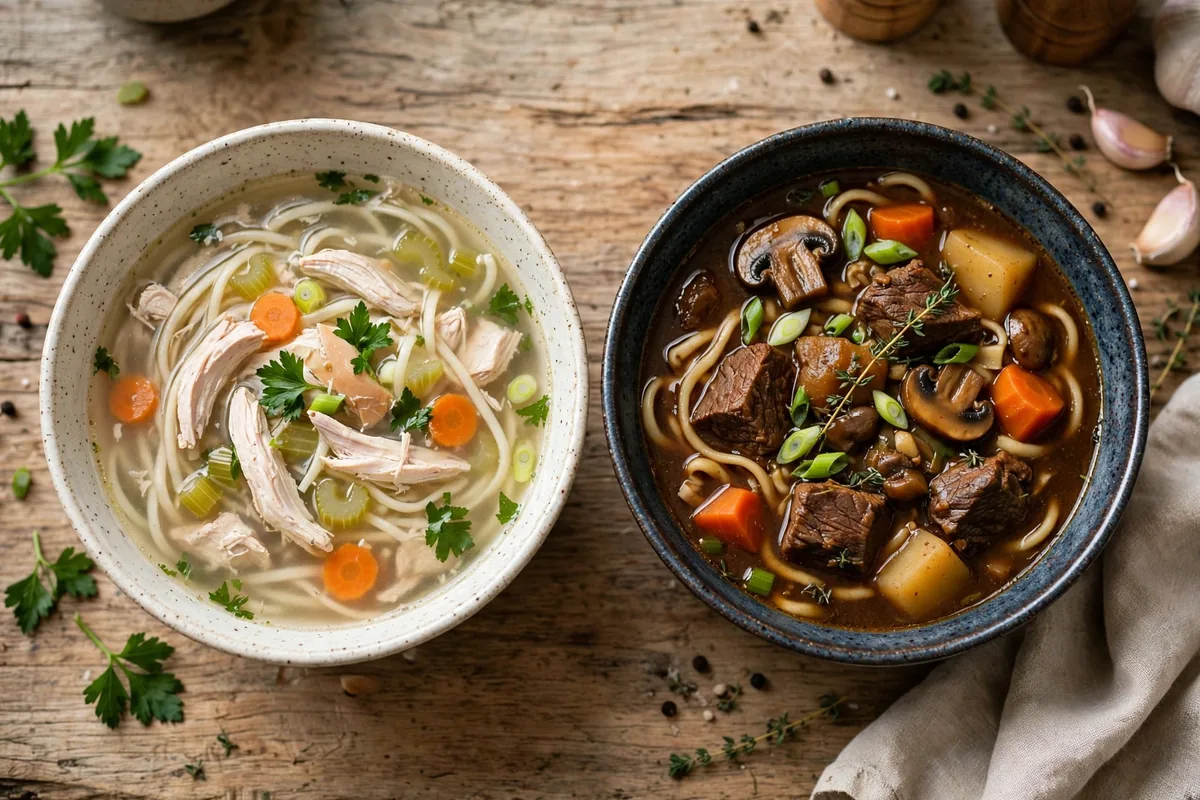
The lightest order on the menu
Want the lightest full meal possible? Order the chicken noodle soup, ask for extra bean sprouts and herbs, go easy on the hoisin, and drink the tamarind juice or plain tea instead of the condensed-milk coffee. That combination lands around 500-600 kcal with real protein and a pile of fresh vegetables. It is one of the more balanced cheap lunches you can buy on Joo Chiat Road.
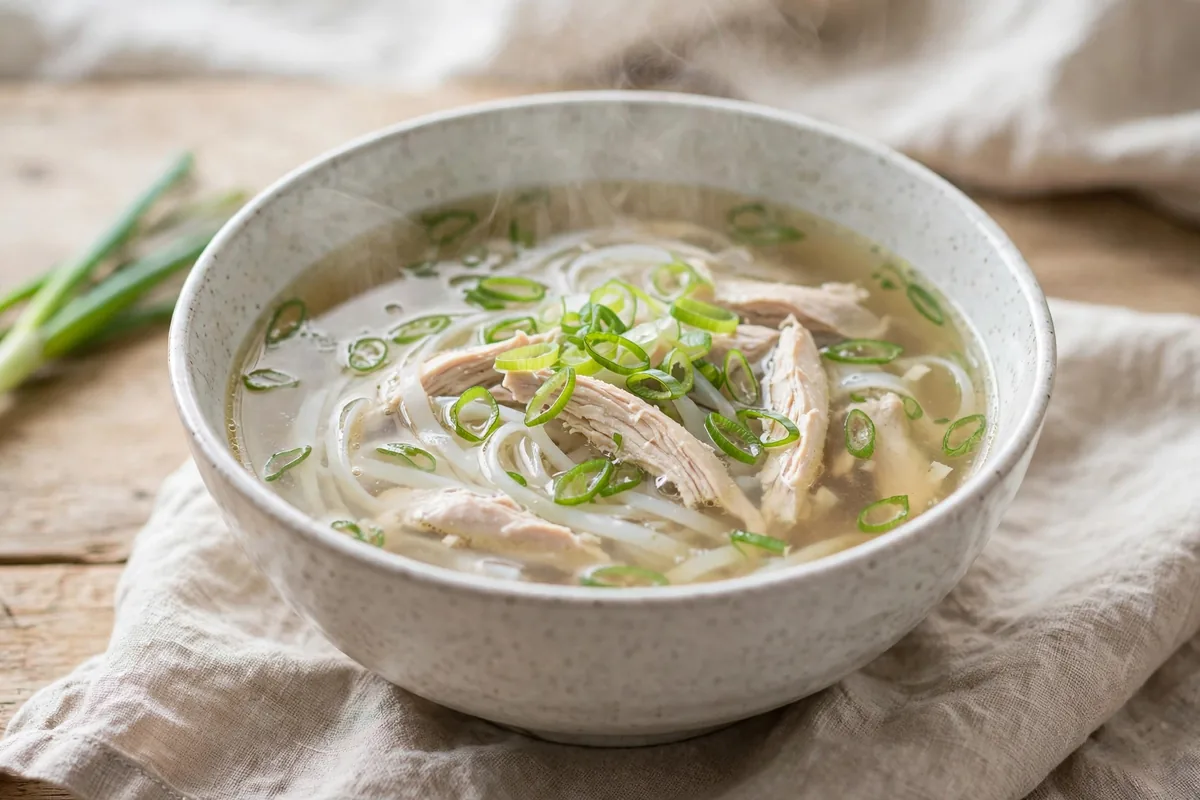
Allergens and diet notes for Long Phung
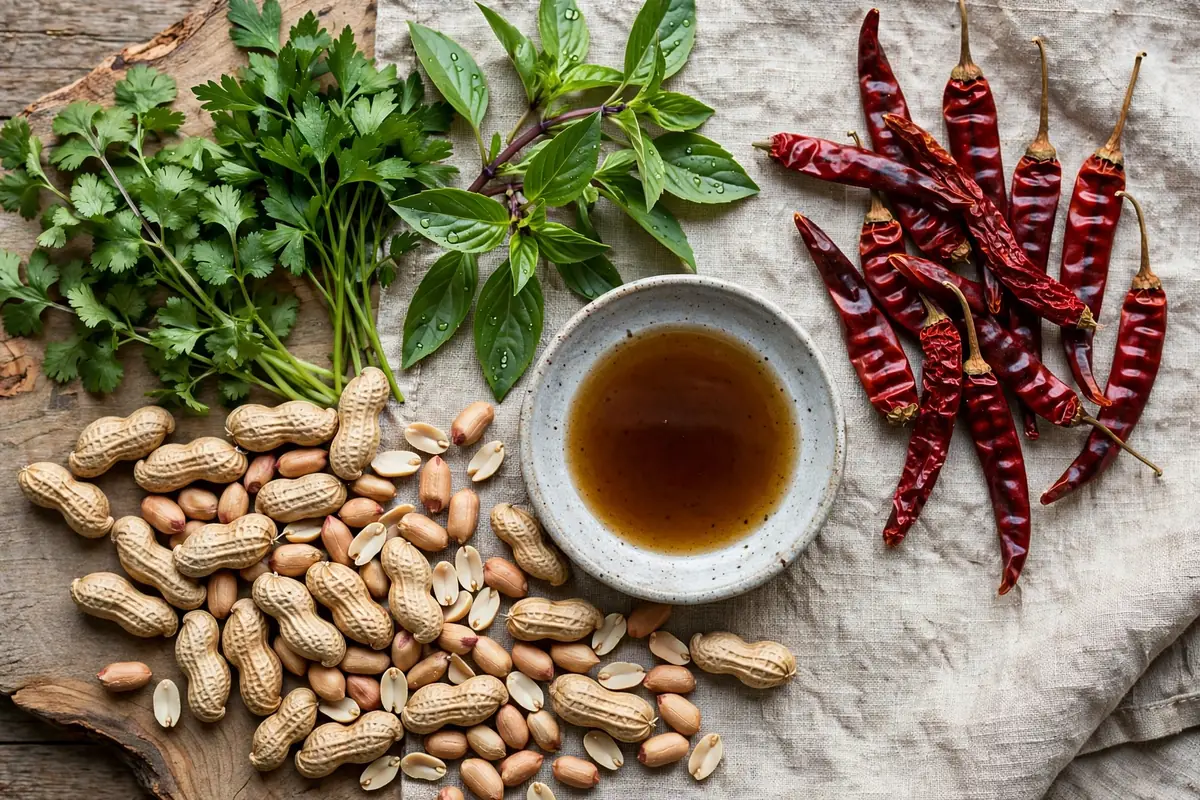
This is the section that matters most, because Vietnamese food hides a few things. Fish sauce (nuoc mam) is in or alongside nearly everything, including dishes that look vegetarian. Shellfish appears in the spring rolls and some salads. Peanuts turn up as garnish on the vermicelli dishes and in dipping sauces. The rice noodles and rice paper are gluten free, but the fried spring rolls and anything with soy-based seasoning are not.
| Diet / Allergen | What to Know | Verdict |
|---|---|---|
| Gluten free | Rice noodles, rice paper, rice are safe; fried rolls and soy seasoning are not | Mostly yes |
| Shellfish allergy | Prawns in goi cuon and some salads; ask before ordering | Ask staff |
| Peanut allergy | Peanuts garnish vermicelli dishes; peanut bits in dipping sauces | Ask staff |
| Fish sauce | In or beside nearly every dish, including dipping sauces | Nearly everywhere |
| Vegetarian | Very few truly vegetarian options; even veg-looking dishes use fish sauce | Limited |
| Pork | Grilled pork, pork chop rice, pork in rolls; the restaurant is not halal certified | Common |
Cross-contact is the honest caveat. This is a small, fast kitchen cooking pork, shellfish, peanuts and fish sauce all day on shared equipment. If your allergy is severe, a shophouse restaurant like this is not the safest bet no matter what you order. For milder sensitivities, the clear soups with a direct question to the staff are the most controllable orders.
Gluten, shellfish and peanut notes
The good news first: pho noodles, rice paper rolls and broken rice are all naturally gluten free, which makes Long Phung friendlier than most noodle shops for gluten avoidance. The cautions: the fried spring rolls use wheat-based wrappers, some marinades include soy sauce, and the shared fryer means traces get around. For shellfish and peanut allergies, the move is to order the plain chicken or beef pho, state the allergy clearly when ordering, and skip the garnish plate items you are unsure about. The staff deal with these questions daily.
Long Phung Nutrition FAQ
Where can you find Long Phung nutrition info?
No. There is no official long phung nutrition info: the restaurant publishes no calorie counts, macros or allergen charts. The figures on this page are typical dish-category estimates from public nutrition databases, flagged as approximate throughout.
How many calories are in a bowl of Long Phung pho?
Typical estimates: chicken pho roughly 450-550 kcal, beef brisket pho 500-600 kcal, and the special beef combo with egg 550-650 kcal. These are category estimates, not the restaurant’s own data.
Is pho healthy?
Broadly yes as restaurant food goes: clear broth, lean protein, rice noodles and a large serving of fresh raw herbs and vegetables. Sodium is the main watch-out, and sugary sauces and fried add-ons push the numbers up.
Is Long Phung food gluten free?
Mostly. Rice noodles, rice paper and rice are naturally gluten free. Avoid the fried spring rolls and ask about soy-based marinades. Shared cooking equipment means traces are possible.
Are there vegetarian options at Long Phung?
Very few. Even vegetable-looking dishes typically use fish sauce, and the kitchen cooks meat all day. Strict vegetarians will struggle here; this is a meat-forward menu.