Quick answer: No, not every FoodFare stall is halal certified. Halal certification in Singapore is granted per stall or eating establishment by MUIS, the Islamic Religious Council of Singapore, and it is time-limited. A FoodFare food court or hawker centre can hold both certified and uncertified stalls side by side, so always check the certificate displayed at the stall itself before you order.
FoodFare outlets feel like one big family dining space, and it is easy to assume the whole place shares one halal status. It does not work that way. FoodFare runs food courts, coffee shops and hawker centres filled with independent stalls, and each stall has its own certification story. That single fact shapes everything in this guide.
How Does Halal Certification Work for a FoodFare Stall?
MUIS runs the halal certification system in Singapore, and its Eating Establishment scheme covers stalls inside food courts and hawker centres as individual units. The certificate belongs to the stall, not the building, so a certified stall can sit next to an uncertified one in the same FoodFare outlet. Certification is also time-limited and must be renewed, which means a stall that was certified last year may not hold a current certificate today. That is why a general claim like “FoodFare is halal certified” would be wrong, and why checking the stall itself matters more than trusting a list.
How Do You Check If a FoodFare Stall Is Halal Certified?
Checking takes about a minute once you know what to look for. Start at the stall, then confirm online if you want extra certainty.
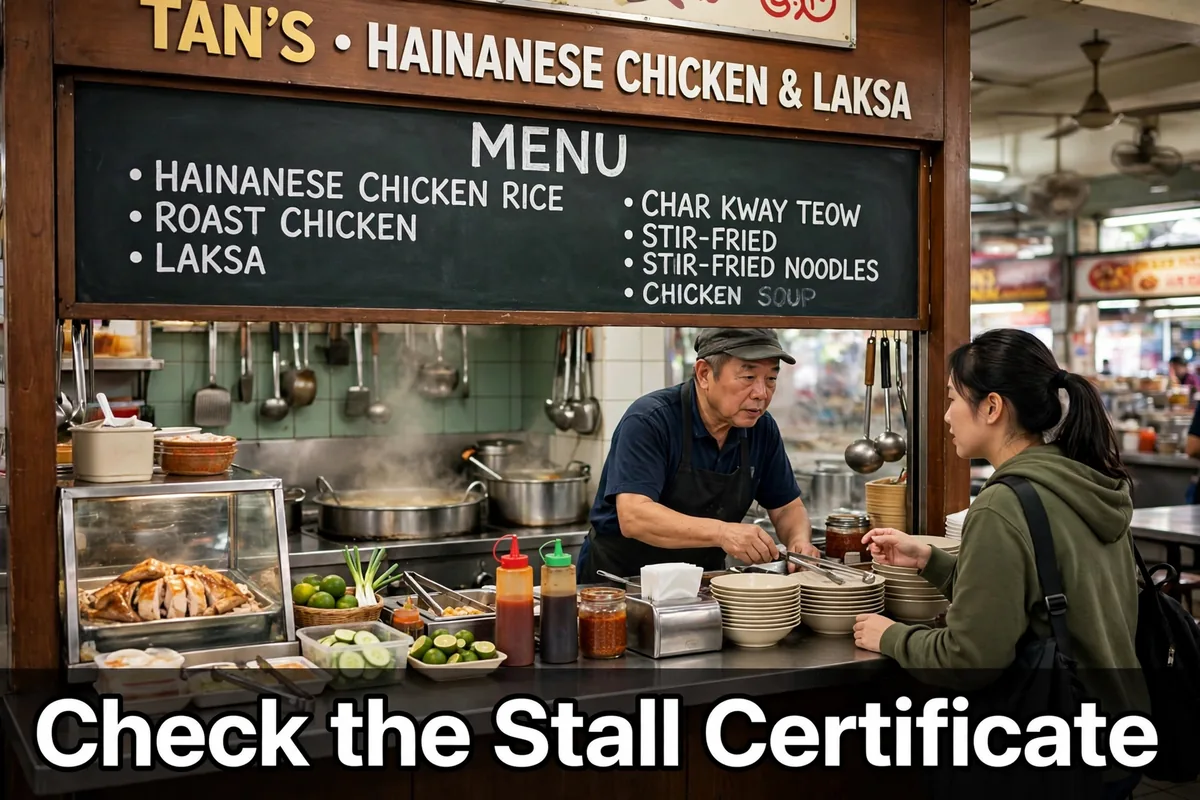
Step 1: Look for the certificate at the stall
Look for the MUIS halal certificate displayed at the stall front, menu board or cashier counter. Note the stall name and unit number as shown, since those details help if you check online later. If you cannot see a certificate, ask the staff directly. A clear answer beats a guess every time.
Step 2: Confirm with MUIS channels
MUIS provides a directory of halal-certified eating establishments, and the MuslimSG app also lets you search for certified outlets. Search by the stall name and outlet before you travel, especially if one dish is the reason for your trip. Third-party halal blogs and lists can help you discover stalls, but MUIS channels are the reference point when a list and a stall disagree.
Step 3: Know the difference between certified, Muslim-owned and halal-friendly
A Muslim-owned stall may follow halal practices without holding formal MUIS certification, and a halal-friendly stall may serve halal dishes in a setting where other stalls do not. Only MUIS certification means the stall has been checked against the standard. If certification matters to you, treat the other two labels as useful hints, not proof.
What Halal Dishes Can You Usually Find at FoodFare?
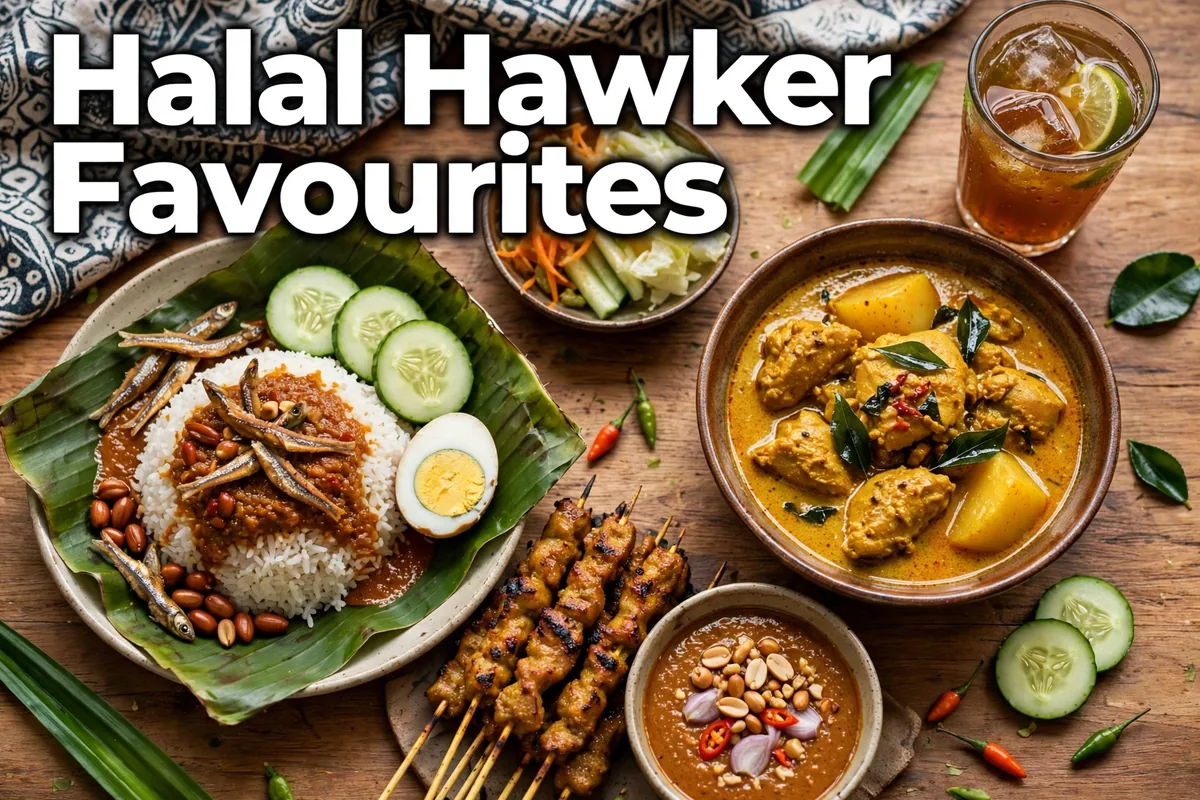
Where a FoodFare outlet has certified stalls, you will often find Malay and Indian Muslim dishes among them. Nasi lemak, mee rebus, satay, roti prata and murtabak are common picks, and many outlets also have certified stalls serving chicken rice or other local dishes. Availability changes by outlet and by stall, so the certified stalls at one FoodFare outlet will not match those at another.
| Dish type | Commonly found at | Check first |
|---|---|---|
| Nasi lemak | Malay stalls | Stall certificate |
| Roti prata and murtabak | Indian Muslim stalls | Stall certificate |
| Satay | Satay and grill stalls | Stall certificate |
| Mee rebus | Malay stalls | Stall certificate |
What Mistakes Should You Avoid?
The biggest mistake is trusting the building. A food court with a halal reputation can still hold uncertified stalls, and one certified stall does not certify its neighbours. Another mistake is trusting an old list: since certificates expire and renew, a list from last year can be out of date today. Finally, do not assume a dish is halal just because it looks familiar. The same dish name can be cooked halal at one stall and not at another.
FoodFare Halal Certified FAQs
Is FoodFare halal certified?
Not as a whole. FoodFare outlets hold independent stalls, and halal certification is granted per stall by MUIS, so each stall must be checked on its own.
How do I check a FoodFare stall’s halal status?
Look for the MUIS certificate displayed at the stall, then confirm through the MUIS directory or the MuslimSG app using the stall name and unit number.
Is a Muslim-owned stall automatically halal certified?
No. Muslim-owned means the owner is Muslim, while MUIS certification means the stall has been checked against the halal standard. The two are different.
Do halal certificates expire?
Yes. MUIS certification is time-limited and must be renewed, so always check the current certificate rather than an old list.
The Bottom Line
FoodFare can be a great halal dining option, but only stall by stall. Read the stall, not the building, check the displayed certificate, and confirm with MUIS channels when it matters. For the full picture, see the FoodFare menu hub, plus the FoodFare breakfast menu and the FoodFare secret menu guides.