Quick answer: There is no official FoodFare-wide nutrition table. FoodFare food courts, coffee shops and hawker centres are run by independent stalls, and each stall cooks its own recipes, so calories and nutrients differ from stall to stall. This guide explains how to pick lighter dishes, what to ask at the stall, and why numbers you find online often disagree.
Search for FoodFare nutrition facts and you will find plenty of tables, but none of them come from a single official FoodFare source. That is not a gap you can fill by copying numbers from another site. A bowl of fish soup at one stall can be a light, clear broth, while a similar bowl elsewhere is richer and saltier, and both stalls can honestly call it fish soup.
Why Is There No Official FoodFare Nutrition Table?
FoodFare does not run one central kitchen. Its outlets host independent hawkers, and each hawker controls ingredients, oil, salt, sugar and portion size. A central table would need every stall to cook the same recipe in the same way, and that is not how hawker centres work. So if you see a page claiming exact FoodFare nutrition figures for every dish, treat those numbers as estimates from somewhere else, not facts about the stall in front of you.
Which FoodFare Dishes Are Usually the Lighter Choices?
Without invented numbers, you can still rank dishes by how they are cooked. Clear soups, steamed items, fresh vegetables and plain rice or noodles tend to be lighter than deep-fried dishes, rich curries and dishes swimming in gravy. That rule of thumb holds across most stalls, even when the exact recipe changes.
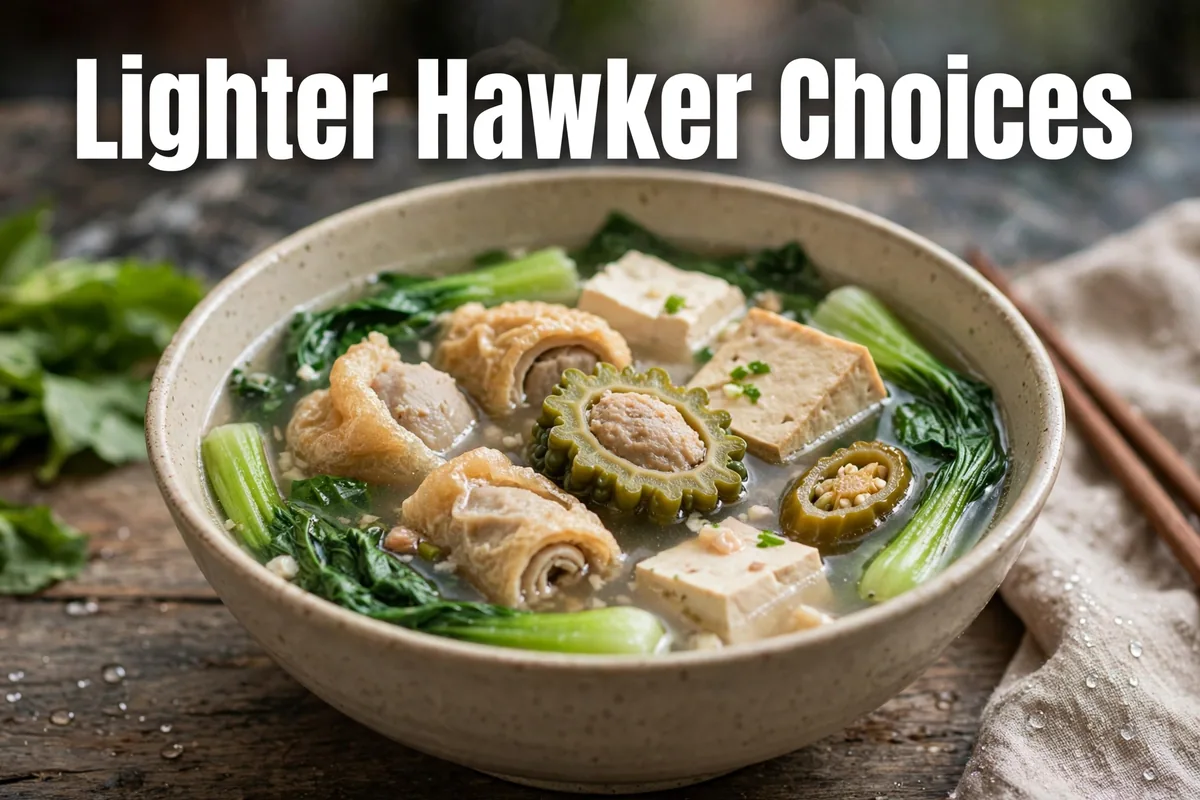
Lighter picks at a typical stall
Yong tau foo with more vegetables and tofu and less fried items is a handy lighter plate, since you build it yourself. Fish soup with a clear broth, steamed chicken rice without the skin, and vegetable-heavy mixed rice plates sit in the same group. Plain porridge with simple sides is another gentle option, especially when you go easy on fried toppings.
Dishes to enjoy in smaller portions
Deep-fried snacks, dishes with thick sweet sauces, and plates heavy on processed meat tend to be richer. You do not have to avoid them, but a smaller portion or sharing them with a vegetable dish keeps the meal balanced. The same logic applies to sugary drinks, which add a lot without filling you up.
What About Drinks, Sauces and Extras?
Drinks and extras quietly shape a meal. A plain water, unsweetened tea or lime without sugar keeps things light, while sweetened drinks and extra gravy add sugar and salt fast. Ask for less gravy, sauce on the side, or extra vegetables when the stall allows it. Most hawkers are used to such requests, and a small change like that often matters more than hunting for an exact calorie figure.

Why Do Online Nutrition Figures Disagree?
Third-party tables disagree because they measure different things: one table might use a home recipe, another a restaurant version, and a third a generic database entry. Portion sizes differ too, and a hawker plate rarely matches a database serving. That is why this article gives no calorie or macro numbers at all. A wrongly precise number is worse than an honest guide to choosing well, so use cooking method and portion size as your guide, and ask the stall about ingredients if you have allergies or a medical condition.
How Can You Check Nutrition Details Before You Order?
Start at the stall: ask what goes into the dish and whether a lighter version is possible. Look for Health Promotion Board healthier-choice markings where an outlet shows them, and treat them as a helpful sign, not a guarantee about every dish at that stall. If you need firm figures for health reasons, the stall owner or the dish recipe is the only real source, and some stalls will not have numbers at all. In that case, pick the simplest cooked dish you can see being made, and keep portions modest.
FoodFare Nutrition Info FAQs
Does FoodFare publish nutrition information?
No. There is no official FoodFare-wide nutrition table, because independent stalls cook their own recipes.
Why does this article show no calorie numbers?
Because any single number would be invented or borrowed from a different recipe. Third-party tables disagree, so this guide ranks dishes by cooking method instead.
What is the healthiest thing to order at FoodFare?
There is no one healthiest dish. Clear soups, steamed items and vegetable-heavy plates are usually lighter picks, and your portion and drink choice matter a lot.
Can I ask a stall to cook a lighter version?
Often, yes. Ask for less oil, less gravy, sauce on the side, or extra vegetables, and most stalls will help where they can.
The Bottom Line
FoodFare nutrition is a stall-by-stall story, not a single table. Judge a dish by how it is cooked, keep portions and sweet drinks in check, and ask the stall when you need to know more. For the full picture, see the FoodFare menu hub, plus the FoodFare breakfast menu and the FoodFare secret menu guides.