King of Fried Rice Nutrition Info
Looking for king of fried rice nutritional info? Here is the honest truth first: the chain publishes no official nutrition data, no calorie counts on the board, nothing on their site. So this page gives you the next best thing, careful independent estimates for every plate, clearly labelled as estimates, based on standard fried rice composition and the generous portions the chain is known for. The full King of Fried Rice menu runs from a $4.90 plain plate to an $11.50 premium bowl, and the calorie story follows the same climb.
Does King of Fried Rice publish nutrition info?
No. There is no nutrition panel on the menu boards, no calorie count on the website, and no published allergen or macro breakdown anywhere we could find. That is normal for a hawker-style fried rice chain in Singapore, most stalls don’t have the lab testing or the menu standardisation that chains like McDonald’s use. It also means any calorie number you see attached to King of Fried Rice online is someone’s estimate, including ours.
So what can you actually rely on? The ingredients are visible: rice, egg, cooking oil, soy-based seasoning, spring onions, and your chosen protein. Wok-hei cooking means high heat and a generous hand with oil, which is exactly what makes the rice taste good and exactly what pushes the calories up. Work with that, and order accordingly.
King of Fried Rice nutritional info: honest calorie estimates
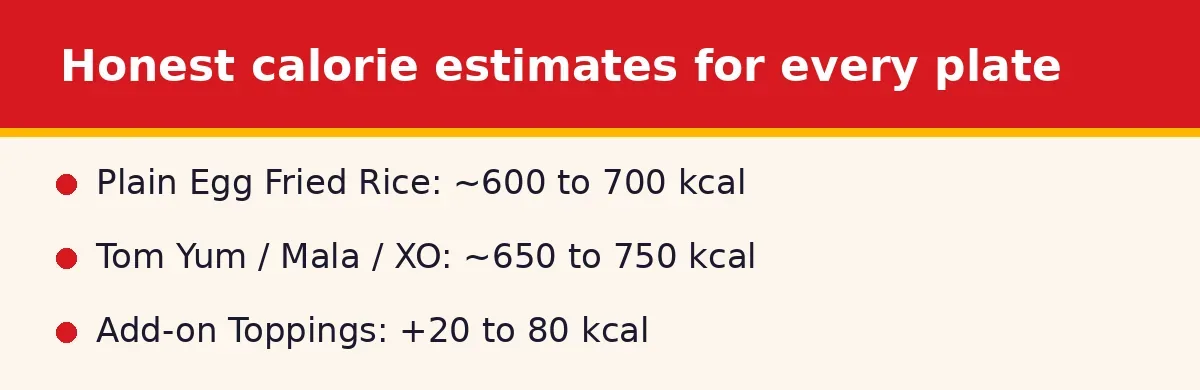
These are independent estimates for a standard plate, based on a generous hawker portion of cooked rice (roughly 1.5 to 2 cups), two eggs, wok oil, and soy seasoning. They are not official, and your outlet’s hand with the oil will move them up or down. Treat the ranges as the honest picture, not a lab result.
| Plate | Estimated Calories | Est. Protein |
|---|---|---|
| Plain egg fried rice | ~600 to 700 kcal per plate | ~14-18 g |
| Tom yum fried rice | ~650 to 750 kcal per plate | ~14-18 g |
| Mala fried rice | ~650 to 750 kcal per plate | ~14-18 g |
| XO fried rice | ~650 to 750 kcal per plate | ~15-20 g |
| $1 add-ons | ~20 to 80 kcal each (veg) more for tobiko | ~1-3 g |
The plain plate at $4.90 is also the lightest thing on the board, which makes the cheapest meal the leanest one too. The flavoured series run slightly higher because the sauces and seasonings add oil and sugar.
What goes into one plate of egg fried rice
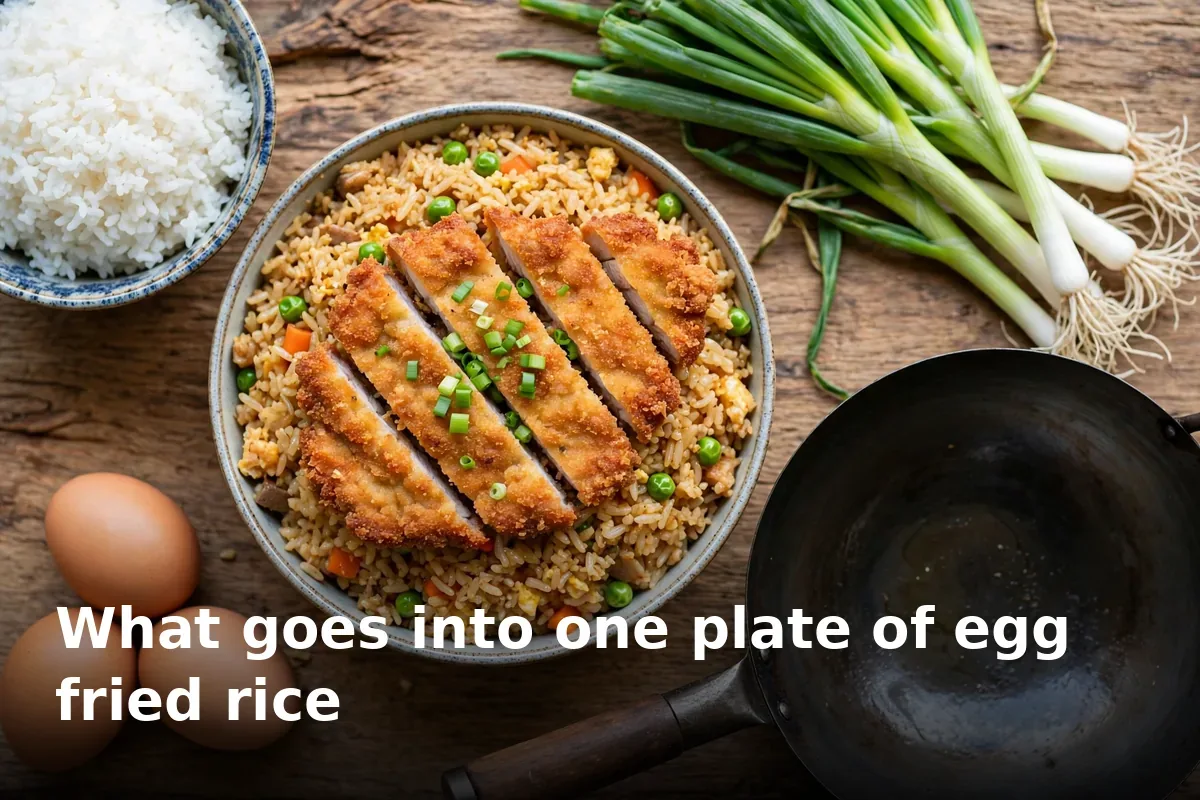
Picture the wok: a scoop of day-old rice, a ladle of oil, two cracked eggs scrambled through, a splash of light and dark soy, spring onions tossed at the end. The rice and oil do almost all the calorie work, roughly 400-450 from the rice and 150-250 from the oil and egg combined. The soy adds sodium more than calories. This is why “just the plain plate” is already a full meal at 600-700 kcal, and why adding a protein pushes it toward 800 and beyond.
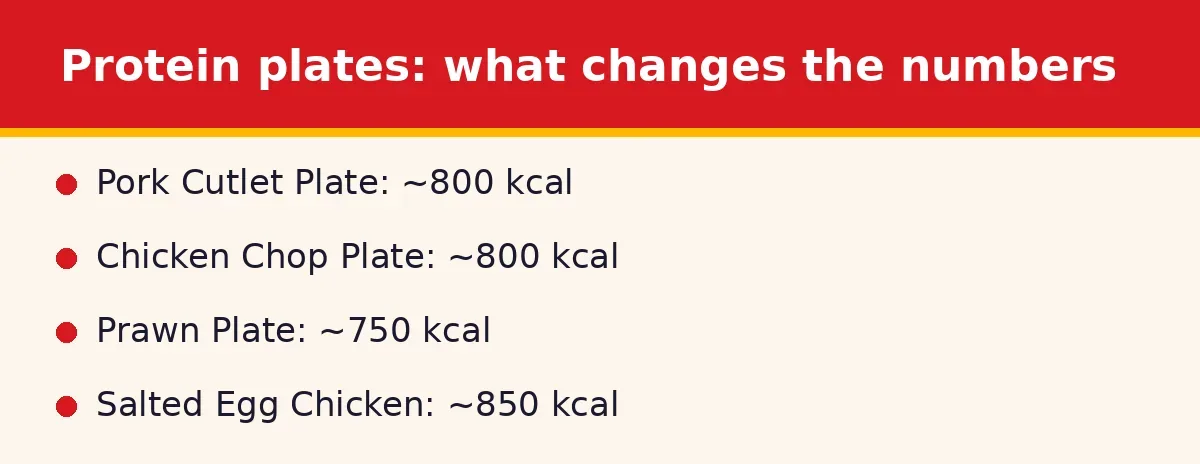
Protein plates: what changes the numbers
Add a protein and you add 150 to 250 kcal, plus real protein. The pork cutlet is breaded and deep-fried, which adds more oil than the prawns or chicken chop. None of this is official, but the ranking is reliable: breaded fried protein adds more than plain cooked protein.
| Protein Plate | Estimated Calories | Est. Protein |
|---|---|---|
| Pork cutlet egg fried rice | ~800 to 900 kcal (breaded, deep-fried) | ~28-35 g |
| Chicken chop egg fried rice | ~750 to 850 kcal | ~30-38 g |
| Prawn egg fried rice | ~700 to 800 kcal | ~25-32 g |
| Salted egg chicken fried rice | ~800 to 900 kcal (rich salted egg sauce) | ~25-32 g |
If protein is your goal, the chicken chop gives you the most protein for the calories. If taste is your goal, the pork cutlet is the signature for a reason, and the extra 100 kcal is the price of the crunch.
Premium plates: crabmeat, tobiko and bacon
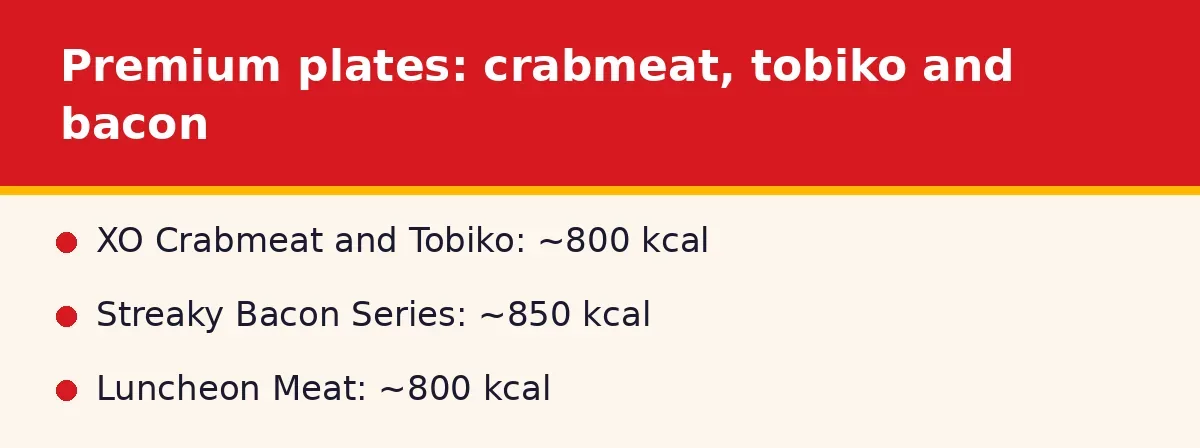
The premium tier does not actually run much heavier than the protein plates, the extra money buys fancier toppings, not bigger portions. Crabmeat and tobiko add protein without much fat. Bacon adds fat, obviously. Estimates:
| Premium Plate | Estimated Calories | Est. Protein |
|---|---|---|
| XO crabmeat and tobiko | ~750 to 850 kcal | ~28-35 g |
| Streaky Bacon series | ~800 to 900 kcal (bacon fat adds up) | ~25-32 g |
| Luncheon meat egg fried rice | ~750 to 850 kcal (processed meat) | ~22-28 g |
Funny detail: the $11.50 XO crabmeat and tobiko plate is probably the most nutritious thing on the premium tier, real seafood protein, minimal extra fat. The bacon series tastes the most indulgent because it is.
Lighter ways to order at King of Fried Rice
You can’t make wok-hei fried rice a health food, but you can shave a few hundred calories off without much pain. The moves that actually work:
| Lighter Move | Why It Helps | Saves Roughly |
|---|---|---|
| Plain plate + veggie add-on | Skips the fried protein entirely | ~150-250 kcal |
| Prawn instead of pork cutlet | No breading, no deep-fry | ~100 kcal |
| Chilli on the side | Chilli oil adds calories fast | ~50-100 kcal |
| Share a protein plate | Half the plate, half the calories | ~350-450 kcal |

The sodium question nobody asks
Everyone asks about calories; almost nobody asks about sodium, and at a fried rice stall the sodium is the bigger deal. Between the soy seasoning, the XO sauce, the salted egg, and the chilli, a single plate can easily carry 1,200 to 1,800 mg of sodium, more than half a day’s worth in one sitting. If you watch blood pressure, this matters more than the calorie count. Ask for less soy if the stall will do it, skip the extra chilli oil, and drink water, not a sweet drink, with the meal.
King of Fried Rice Nutrition FAQ
How many calories are in King of Fried Rice?
The chain publishes no official data. Our independent estimates: plain egg fried rice around 600-700 kcal, protein plates 750-900 kcal, premium plates 750-900 kcal. All figures are estimates.
What is the healthiest thing to order at King of Fried Rice?
The plain egg fried rice with a vegetable add-on: roughly 620-750 kcal estimated, the lightest full meal on the board, and the cheapest at $5.90 total.
Does King of Fried Rice have a low-calorie option?
Not officially. The lightest practical order is the plain plate, and you can lighten any order by choosing prawn over breaded pork cutlet and keeping chilli oil on the side.
Is the sodium high at King of Fried Rice?
Yes, estimated 1,200-1,800 mg per plate from soy seasoning, sauces and chilli. If you watch sodium, this is the number to mind more than calories.
Does King of Fried Rice publish allergen information?
No. The rice contains egg and soy as standard, and the wok handles pork, seafood and gluten. If you have an allergy, ask the outlet directly before ordering.