Pontian Wanton Noodles Halal Certified Singapore 2026
✓ Status verified October 2026
The honest answer to the Pontian Wanton Noodles halal question: no, the chain is not halal certified, and its menu includes pork and lard. This guide gives the full status check, what the chain does and does not claim, and where to find genuinely halal wanton mee instead. The full Pontian Wanton Noodles menu covers the dishes themselves.
Is Pontian Wanton Noodles halal certified?
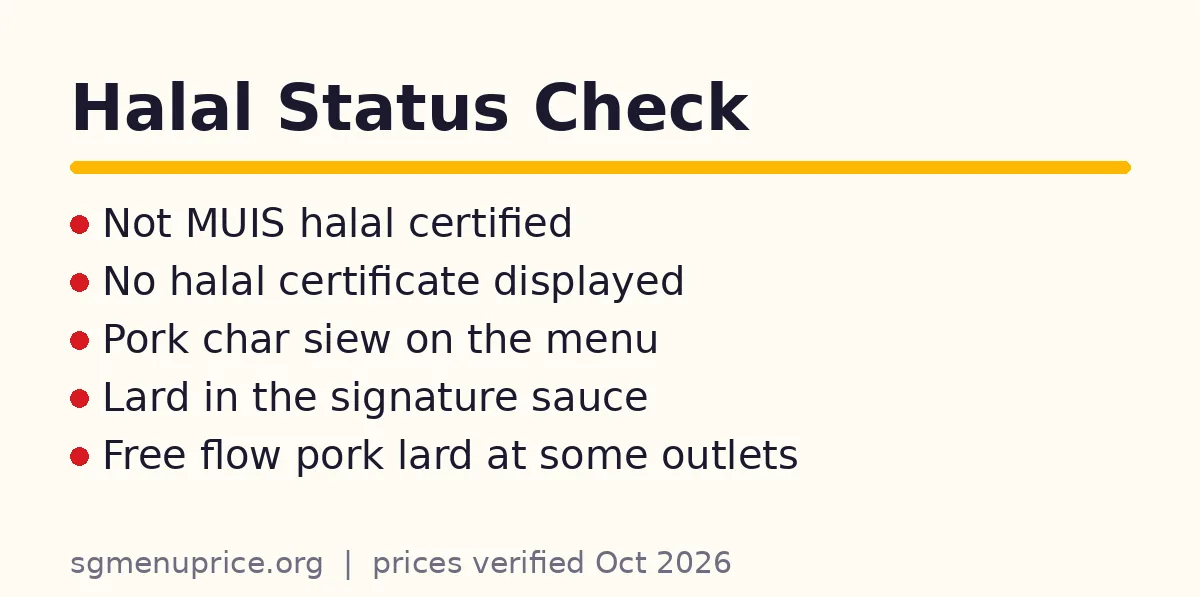
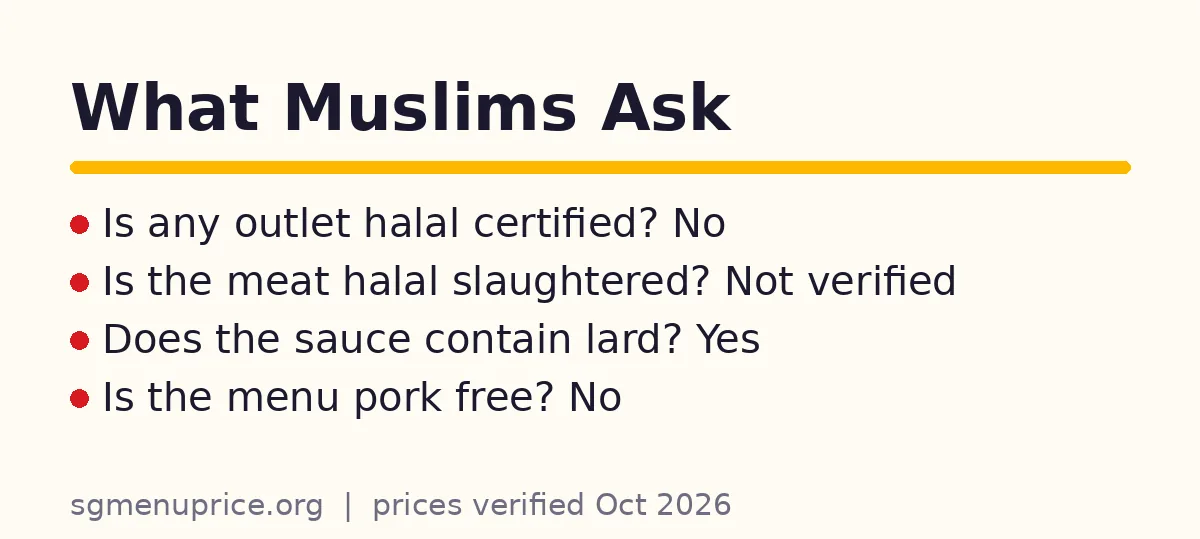
No. Pontian Wanton Noodles holds no MUIS halal certification, and no halal certificate is displayed at its outlets. A September 2026 re-check of Singapore’s well-known wanton mee stalls explicitly lists Pontian among the stalls that are not halal certified. That has not changed.
What halal certification actually requires
Halal certification in Singapore comes from MUIS and covers far more than the absence of pork: halal slaughter of meat, halal-certified ingredients, no alcohol, and audited preparation and cleanliness. A “no pork, no lard” sign, which some eateries display, is not certification and is not a halal guarantee. Pontian displays no halal certificate of any kind, so the question is settled at the first hurdle.
Does Pontian Wanton Noodles use pork or lard?
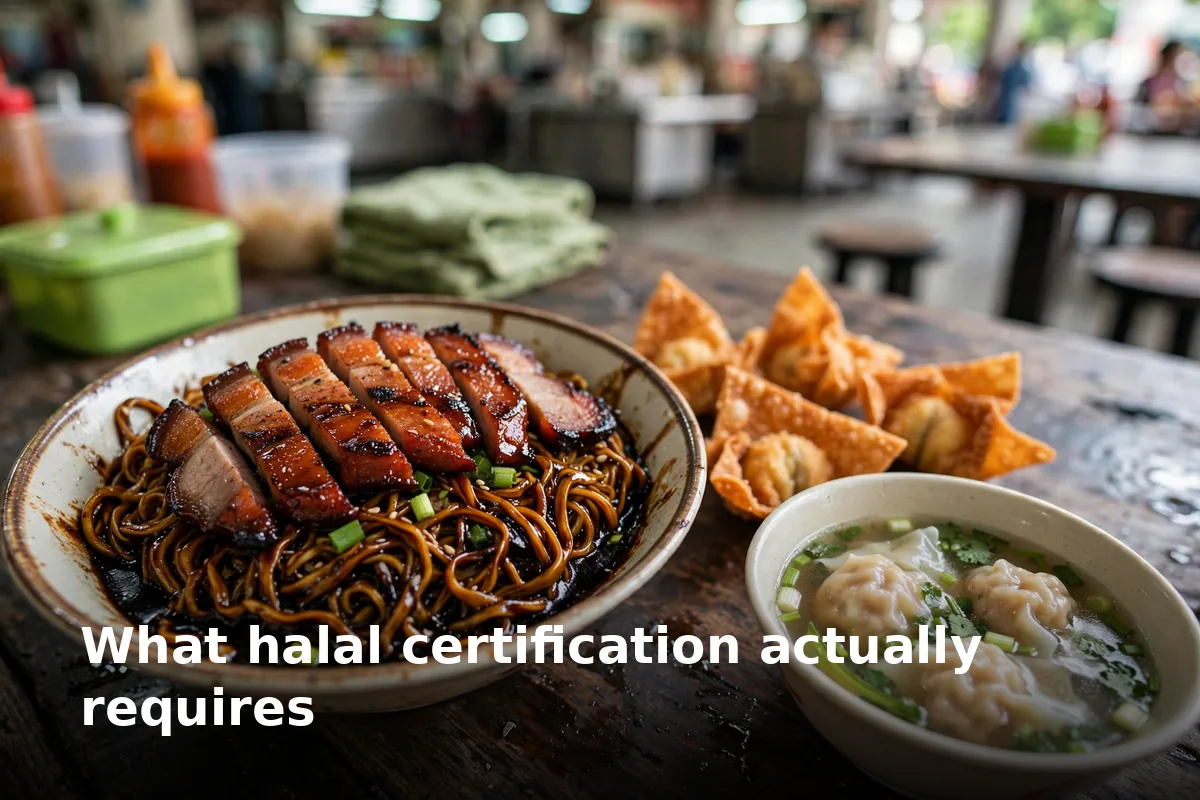
Yes, both. The char siew on the signature bowl is barbecued pork, the wanton filling is minced pork, the menu includes pork rib noodles, and the Pontian-style black sauce is described as containing lard alongside dark soy, oyster sauce, ketchup and sesame oil. Reviewers also report that some outlets serve free-flow pork lard (“zhu you cha”) on request. There is no ambiguity here: pork and lard are part of the Pontian menu.
| Item | Status |
|---|---|
| Char siew (on the signature bowl) | Barbecued pork |
| Wanton filling | Minced pork (reviewers note pork in the filling) |
| Pork rib noodles | Braised pork ribs, a menu item |
| Signature black sauce | Described as containing lard |
| Free-flow lard | Reported at some outlets on request |
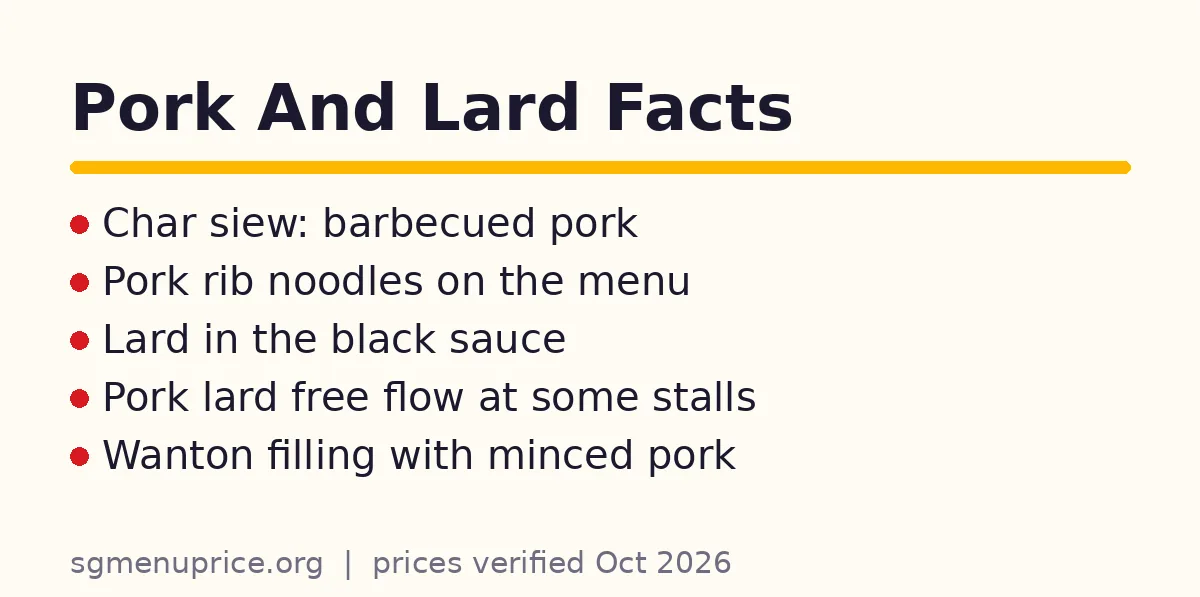
The free flow lard tub
Regulars love the crispy pork lard (“zhu you cha”) that some Pontian stalls serve free flow on request, and reviewers rate it as a highlight of the meal. It is also the clearest possible evidence that the kitchen works with pork. If you avoid pork, that tub tells you everything you need to know.
Can Muslims eat at Pontian Wanton Noodles?
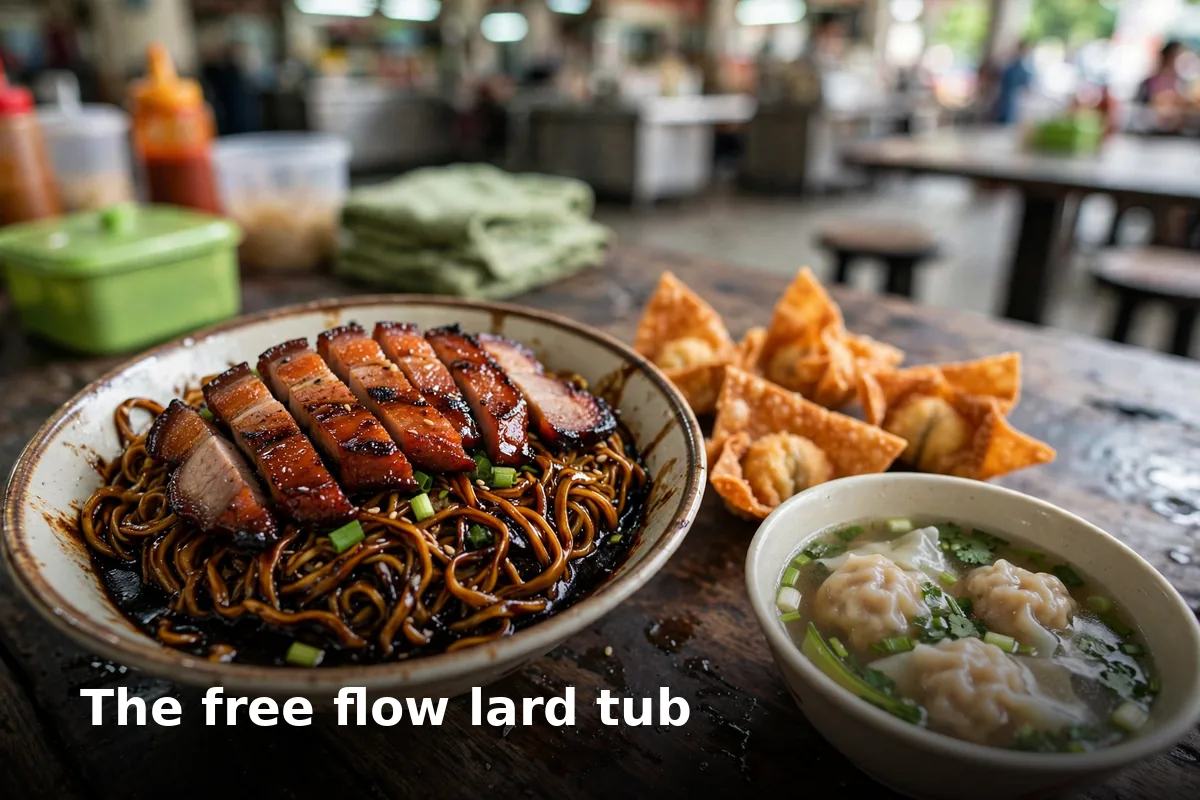
Not on a strict halal diet, no. With pork char siew, pork wanton filling, lard in the sauce and free-flow pork lard at some stalls, there is no version of the Pontian bowl that avoids pork entirely, and there is no halal certification to fall back on. That is a personal call for each Muslim diner, but for anyone keeping strictly halal, Pontian is not suitable.
Where can you find halal wanton mee in Singapore instead?
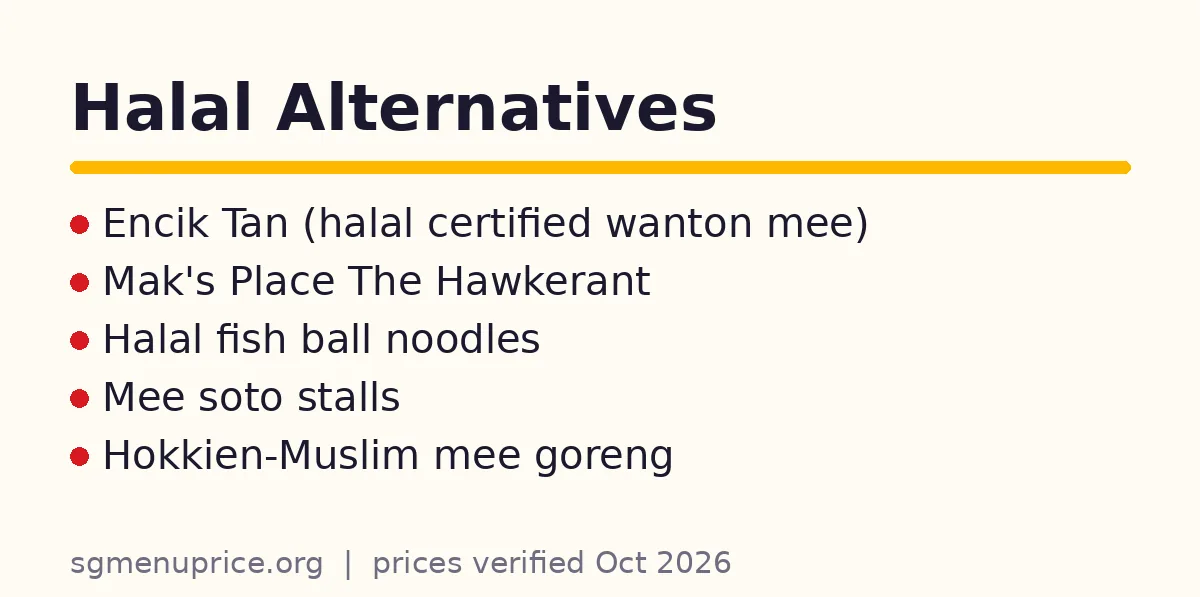
Halal wanton mee exists, just not at Pontian. The best-known halal certified option is Encik Tan, which serves a chicken-based wanton mee at halal certified outlets. Mak’s Place The Hawkerant is another halal Chinese option with wanton noodles on the menu. For other noodle fixes, halal fish ball noodles, mee soto and Hokkien-Muslim mee goreng are widely available at halal stalls islandwide.
Find a Pontian outlet near you anyway on the Pontian near me guide, or look at the Pontian kids menu for family orders.
Frequently asked questions
Is Pontian Wanton Noodles halal certified?
No. It holds no MUIS halal certification and displays no halal certificate at its outlets.
Does Pontian Wanton Noodles contain pork?
Yes. The char siew is barbecued pork, the wanton filling is minced pork, and the menu includes pork rib noodles.
Does Pontian use lard?
Yes. The Pontian-style black sauce is described as containing lard, and some outlets serve free-flow pork lard on request.
Is any Pontian outlet halal certified?
None that can be verified. No Pontian outlet holds MUIS halal certification.
Where can Muslims eat wanton mee in Singapore?
Encik Tan serves halal certified wanton mee made with chicken, and Mak’s Place The Hawkerant is another halal Chinese option.