Ri Ri Hong Value Meals
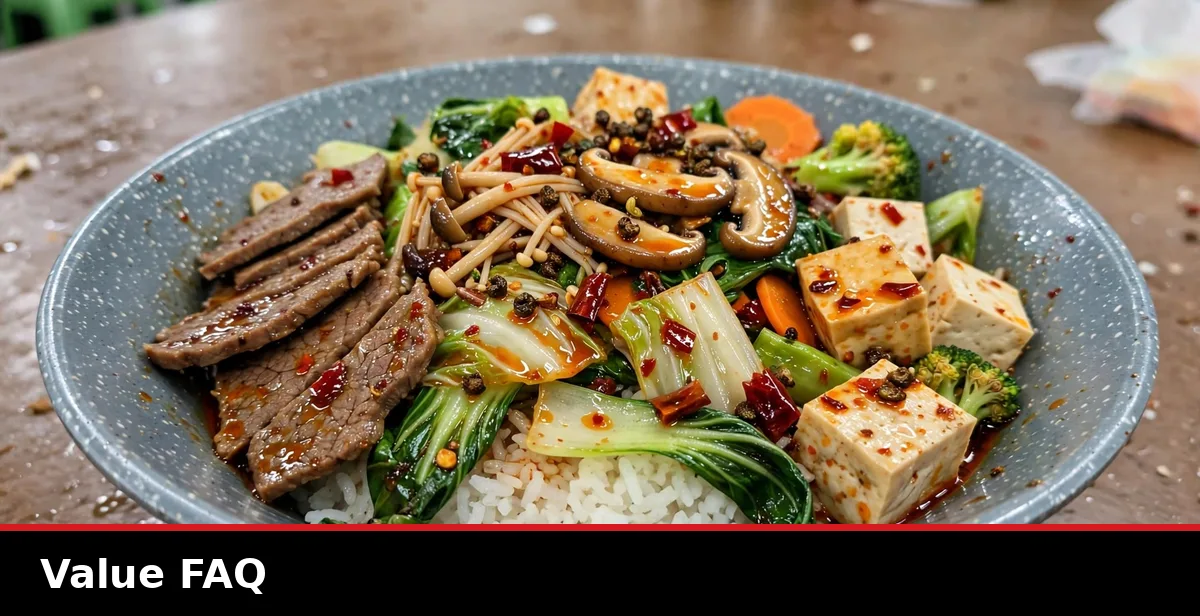
The ri ri hong value meals price question comes down to one happy fact: Ri Ri Hong is already a value stall, even though it sells no official value meal. Vegetables cost $1 a portion, meats $2, and seafood or lamb $3, with rice from about $0.50, so a filling bowl can land well under $10 if you pick smart. For the full stall rundown first, see the Ri Ri Hong menu.
Does Ri Ri Hong sell official value meals?
No official value meal, value set, or budget bundle turned up in any guide for this stall. That sounds like bad news for bargain hunters, but it is actually the opposite. At Ri Ri Hong, value is built into the pricing itself: the stall charges by ingredient type instead of by weight, so the cheapest ingredients are also the ones that fill the bowl fastest.
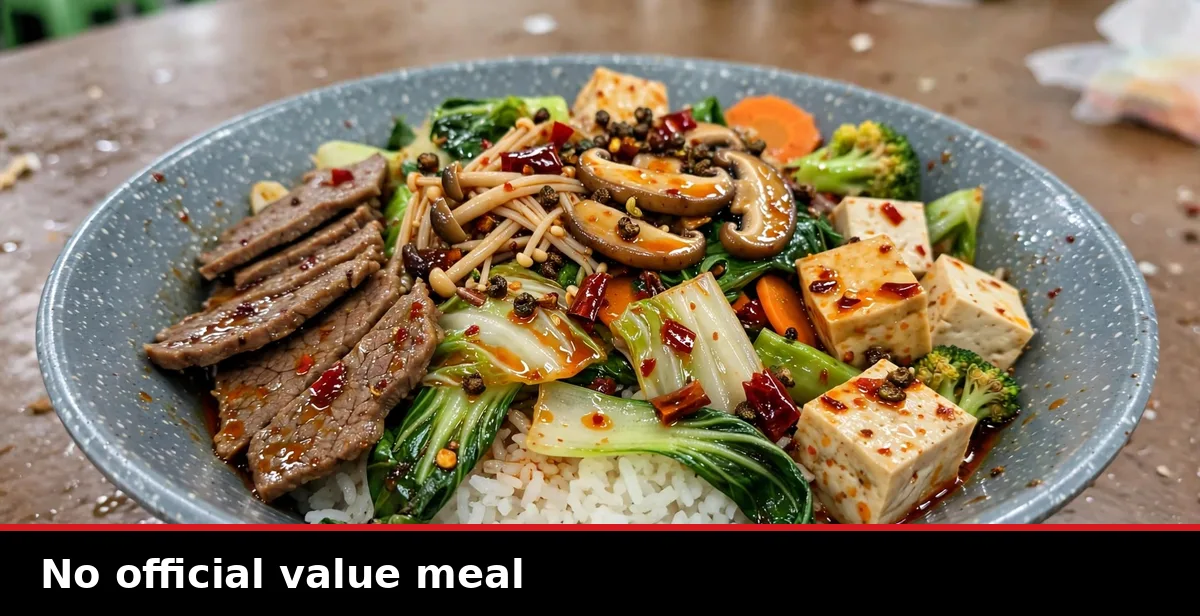
Think of it this way. A weight-priced mala stall charges you for every gram, so a watery vegetable can cost as much as a meat slice once it soaks up sauce. Here, a vegetable portion is $1 no matter how much it weighs. Load up on vegetables and the bowl gets big while the bill stays small.
How much does a cheap filling bowl cost?
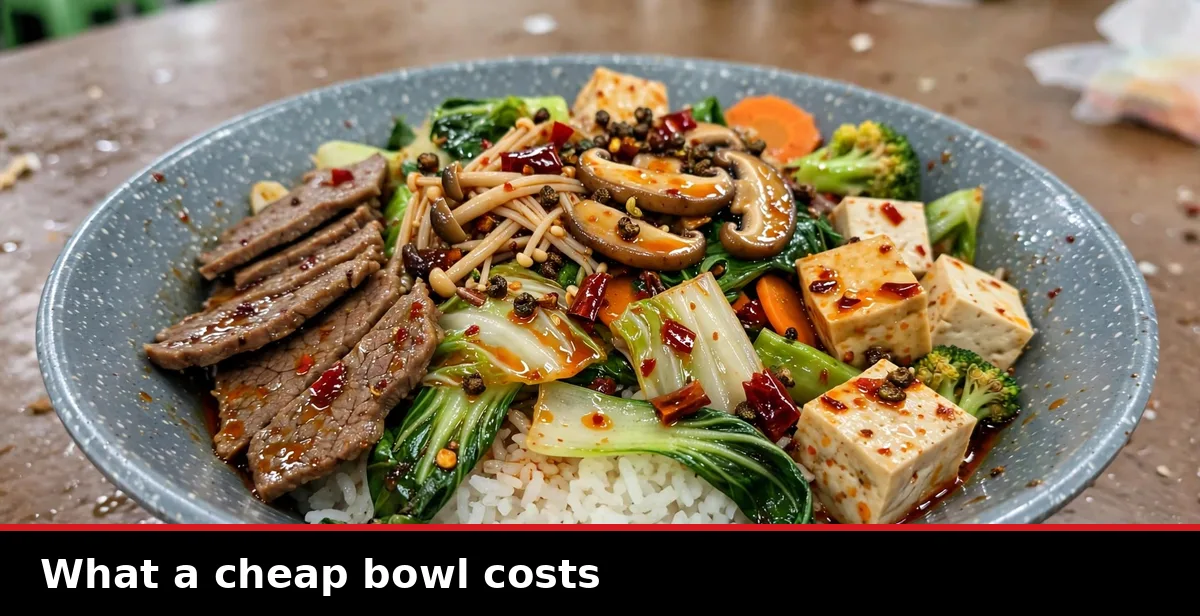
Start with the portion rates from the October 2026 MissLobang guide, confirmed by the older Eatbook review: $1 for vegetables, $2 for meats, $3 for seafood or lamb, and rice from about $0.50. A bowl with nothing but vegetables and rice is the floor, and every meat portion you add moves the total up by $2.
| Portion Type | Examples | Rate |
|---|---|---|
| Vegetables | Cabbage, kang kong, bean sprouts, mushrooms, lotus root | $1 |
| Meats | Pork slices, chicken, meatballs, Chinese sausage | $2 |
| Seafood or lamb | Prawns, fish, squid, lamb slices | $3 |
| Rice | One bowl of steamed rice | From ~$0.50 |
Those rates put a veg-only bowl with rice at around $5.50 for five vegetable portions, and a veggie heavy bowl with one meat at around $7.50. Diner reports back this up: one diner paid $10 for seven vegetables, one meat, and noodles, and another guide puts typical spending at $8 to $12 per person. Noodle portions are priced at the stall, so noodle bowls are flagged rather than priced here.
What are the best value builds under $10?
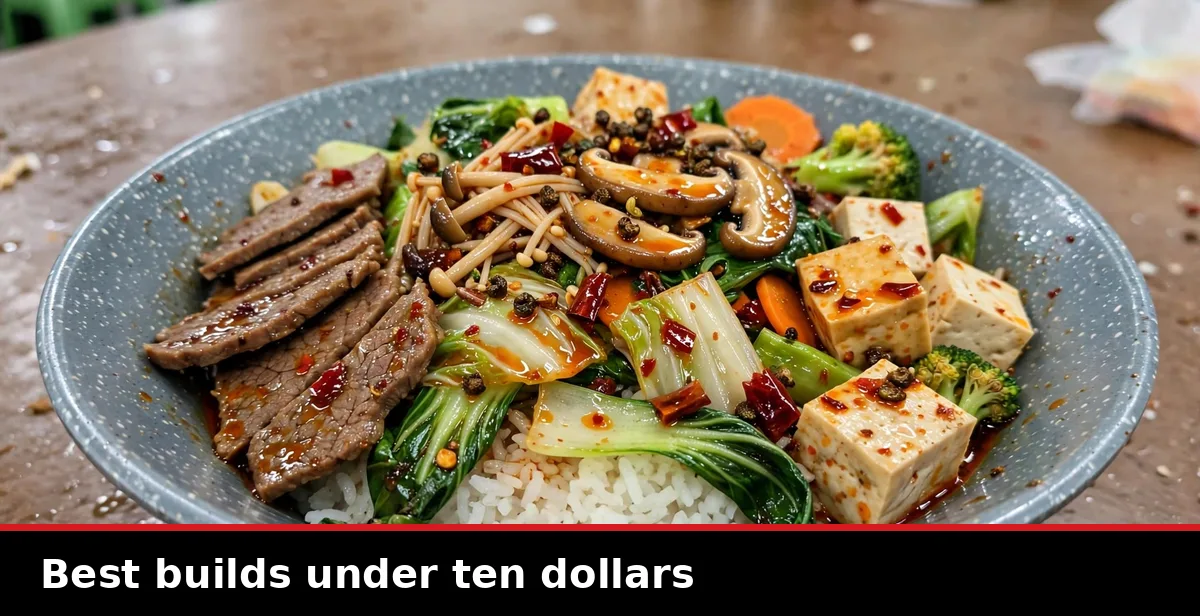
These builds all stay under $10 on the portion rates, and each one is a complete meal with rice. They are worked estimates, not stall prices, so treat them as a shopping list and confirm at the counter.
| Value Build | What Is in It | Worked Total |
|---|---|---|
| Veg only bowl | 5 veg, 1 rice | ~$5.50 |
| Veggie heavy bowl | 5 veg, 1 meat, 1 rice | ~$7.50 |
| Balanced solo | 3 veg, 2 meat, 1 rice | ~$7.50 |
| Meat plus veg bowl | 4 veg, 2 meat, 1 rice | ~$8.50 |
| One seafood treat | 4 veg, 1 meat, 1 seafood, 1 rice | ~$9.50 |
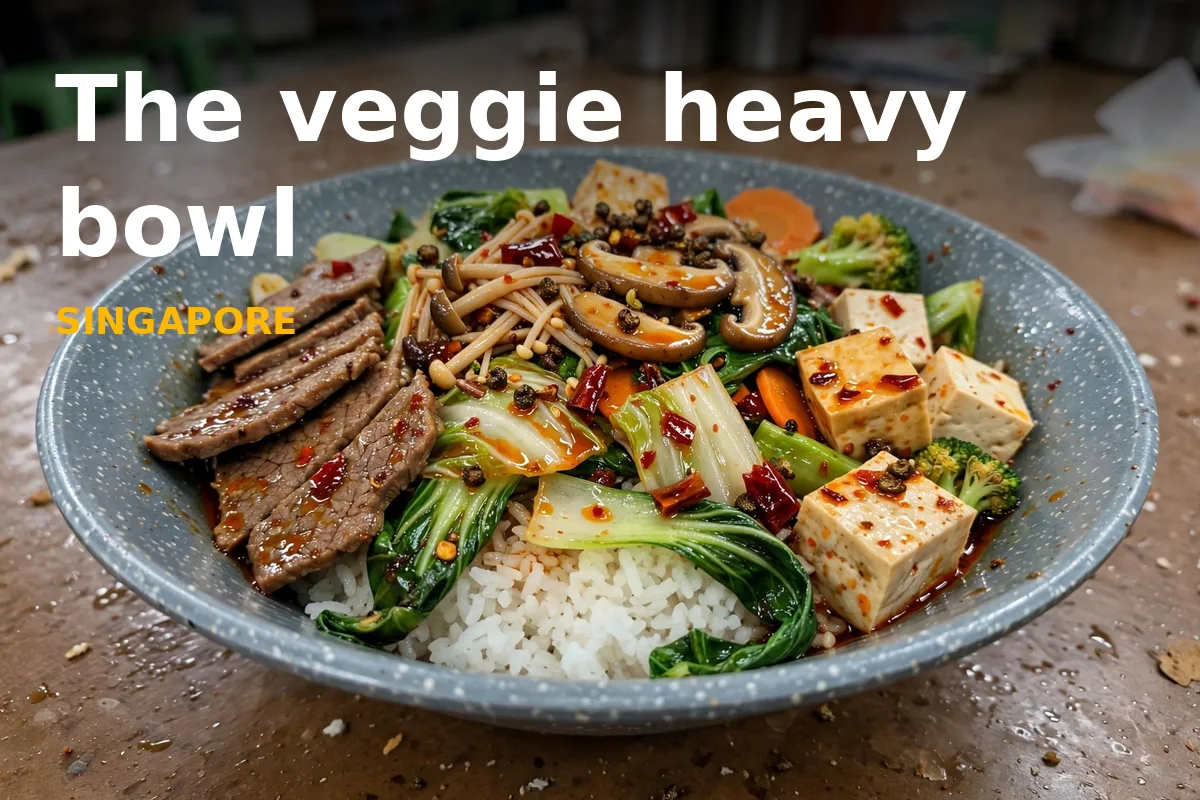
The veggie heavy bowl
Five vegetables sounds like a lot, but at a mala stall it is the smartest spend. Pick a mix of textures: something leafy like kang kong, something crunchy like lotus root or bean sprouts, mushrooms for savouriness, and tofu skin or beancurd to soak up the sauce. One meat portion, pork slices or chicken, gives the bowl its protein, and the whole thing still lands around $7.50 with rice.
Sharing one big bowl between two
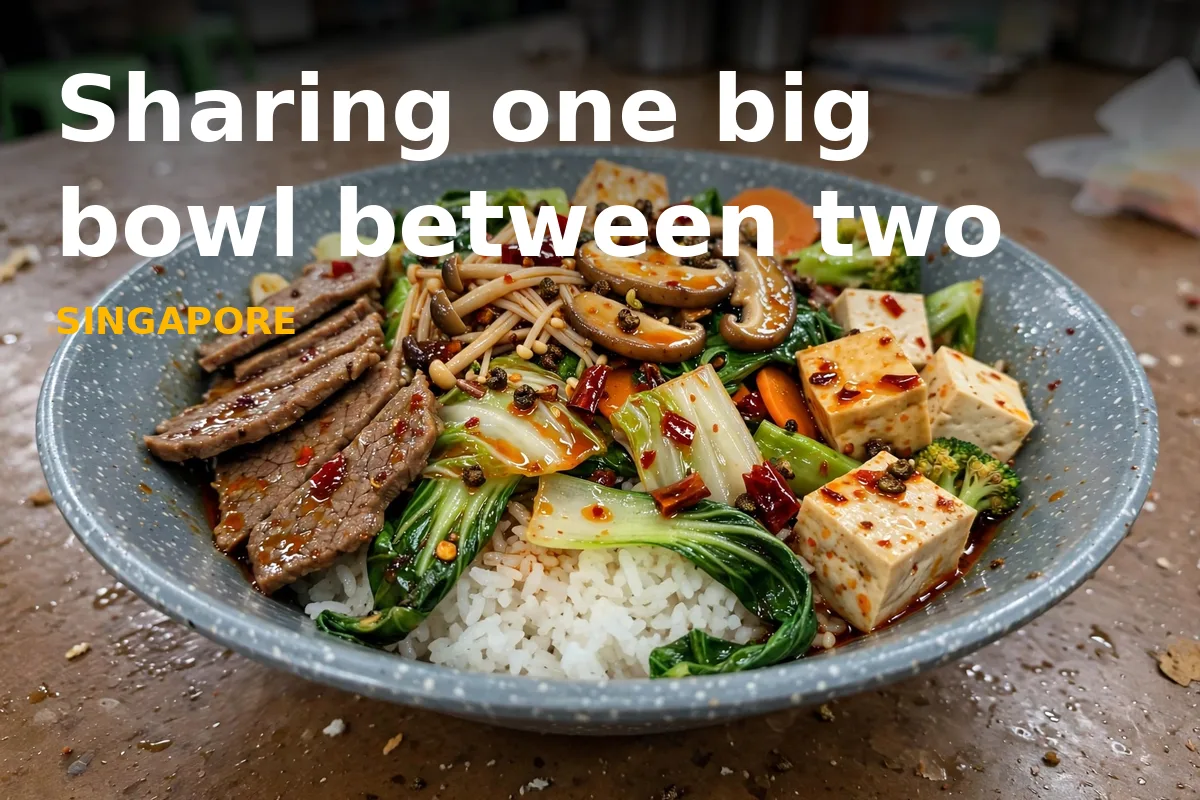
Sharing is the other great value move. Two people can split one large bowl and order two bowls of rice, which works out cheaper per person than two small bowls, since you share the meat and seafood portions across a bigger vegetable base. One Burpple diner reported about $21 for two bowls plus two rice shared among three people, which shows how far sharing stretches the bill.
How do you keep the bill down without losing flavour?
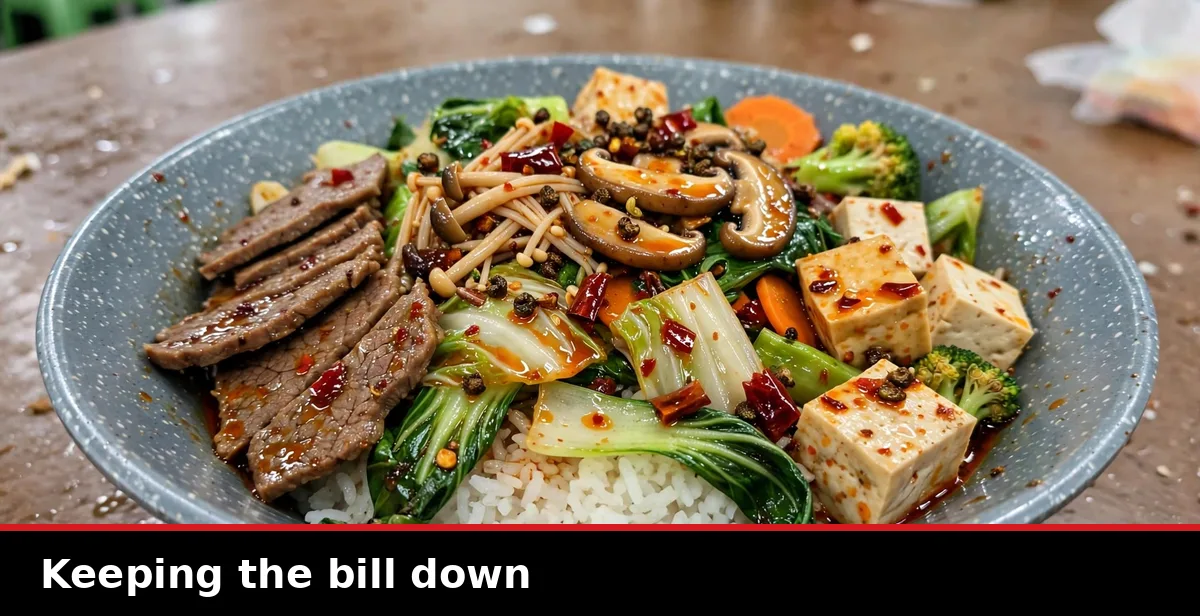
Five habits keep a Ri Ri Hong bowl cheap. Lean on vegetables, go easy on seafood, share when you can, pick your spice with care, and skip extras you don’t need. None of these means a boring bowl: the mala sauce does most of the flavour work, so even a veg-led bowl tastes rich.
| Money Saving Move | Why It Works | Saving |
|---|---|---|
| Go veg heavy | Veg portions are $1, the cheapest filler | Biggest saver |
| Limit seafood to one portion | Seafood is $3, triple a veg portion | Up to $2 a swap |
| Share one big bowl | One bowl, two rice, shared proteins | Per person drops |
| Pick dry style | Dry bowls feel richer with less sauce | No extra cost |
| Skip a second base | One rice or one noodle is enough | About $0.50 |
Is Ri Ri Hong actually cheaper than other mala stalls?
It depends on how you order, but the portion system gives it a real edge for careful eaters. At a per-100g stall, a heavy basket can surprise you at the scale, and the October 2026 MissLobang guide warns that several of the cheapest stalls set minimum spends of $6 to $10. At Ri Ri Hong you can total the bill as you pick, and no minimum spend was mentioned in any guide we checked, though you should still confirm at the stall.
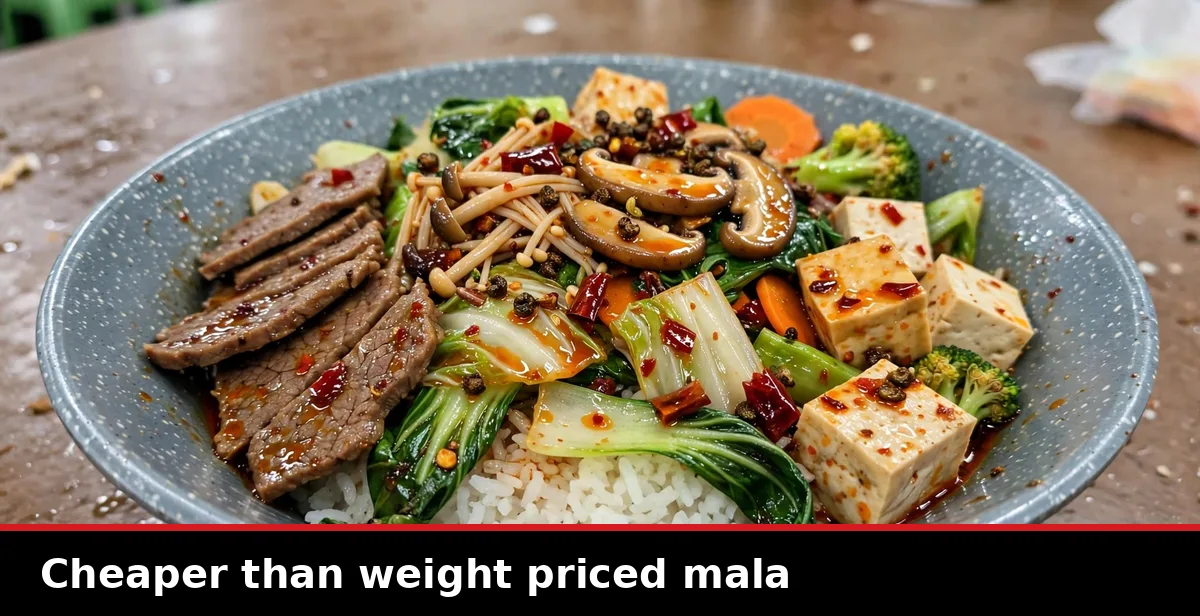
Where it is not cheaper: if you load up on seafood and lamb at $3 a portion, the bill climbs fast and can pass a weight-priced bowl. Value at Ri Ri Hong comes from vegetable-heavy ordering. Seafood lovers should treat it as a treat, not the base of the bowl.
Ri Ri Hong Value Meals FAQ
Does Ri Ri Hong have an official value meal?
No official value meal or budget bundle was found. Value comes from the portion pricing: vegetables $1, meats $2, seafood or lamb $3, rice from about $0.50.
What is the cheapest filling bowl at Ri Ri Hong?
A veg-only bowl with five vegetable portions and rice works out to around $5.50 on the portion rates. Add one meat portion and it lands around $7.50.
How much do most diners spend at Ri Ri Hong?
Diner guides put typical spending at $8 to $12 per person. One diner paid $10 for seven vegetables, one meat, and noodles.
Is there a minimum spend at Ri Ri Hong?
No minimum spend was mentioned in any guide we checked for this stall, unlike some weight-priced mala stalls with $6 to $10 minimums. Confirm at the counter before ordering.
Does sharing a bowl save money at Ri Ri Hong?
Yes. One large shared bowl plus two bowls of rice costs less per person than two separate bowls, since the proteins stretch across a bigger vegetable base.